Why the “Attention Economy” Narrative Is Failing Mobile Gaming Publishers in 2026
Attention metrics are gaining traction across agencies, platforms, and tech providers. At the same time, mobile game publishers are still working through how and whether those signals reliably map to:
- Buying decisions
- Deal renewals
- Yield stability over time
Recent reporting shows that while momentum around attention-based measurement continues, publishers remain split on its long-term value, particularly when outcomes don’t consistently follow engagement signals.
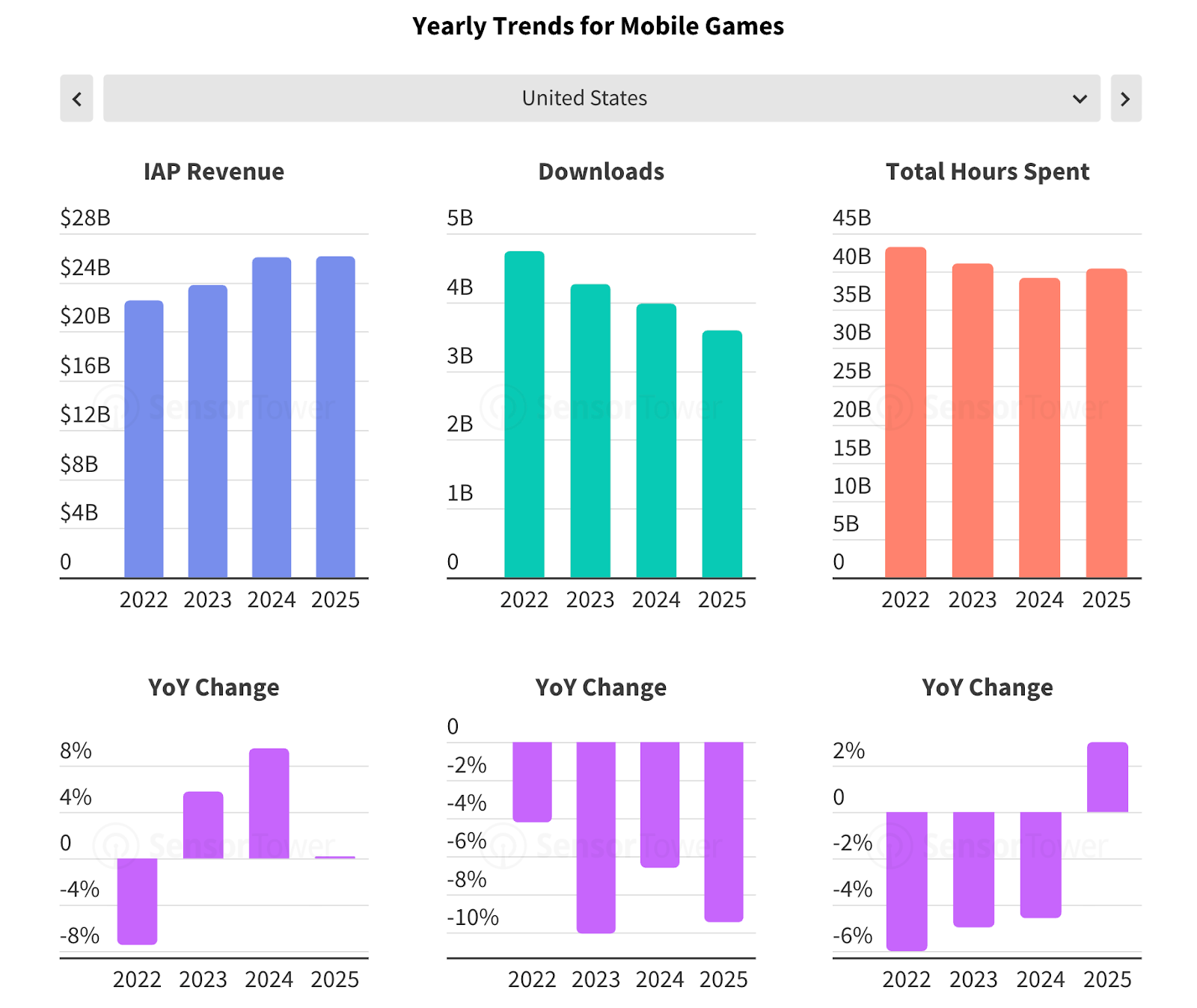
High Attention Doesn’t Automatically Mean Revenue Stability
Across the ecosystem, the focus is shifting toward quality and outcomes over raw volume. For mobile gaming publishers, that means looking beyond high on-screen engagement to evaluate whether ad experiences support:
- Session health
- Player retention
- Long-term demand relationships
Industry analysis shows 2026 strategies increasingly prioritize authenticated audiences and outcome-linked measurement over simple impressions or time spent. In this context, attention becomes one signal among several, not a standalone indicator of value.
Signal Quality Is Rising Across Open Web and In-App Gaming
Market outlooks suggest that publishers are refining how they assess both open web and in-app gaming inventory. The bar is rising on signal clarity, measurability, and commercial fit, not just volume. Attention data still plays a role, but it’s increasingly evaluated alongside:
- Contextual alignment
- Audience definition
- Commercial predictability
In short, attention supports the story, it doesn’t carry it alone.
Operational Reality Still Matters
For mobile gaming publishers, attention-first strategies can introduce additional complexity across SDKs, mediation layers, analytics, and reporting standards. Sustainable growth is increasingly tied to alignment between demand quality, sales execution, and operational clarity, not any single metric, however sophisticated.
This isn’t about advertisers versus publishers. It reflects a shared need for signals that translate into repeatable, scalable decisions.
The attention economy isn’t broken, it’s evolving. In 2026, attention is most valuable when paired with context, audience strength, and outcome clarity. For mobile gaming publishers, the opportunity isn’t to move away from engagement metrics, it’s to connect them to proof points advertisers can confidently plan against and renew, without compromising the player experience.

.png)