

Women Are Leading Mobile Gaming. Are You Showing Up?
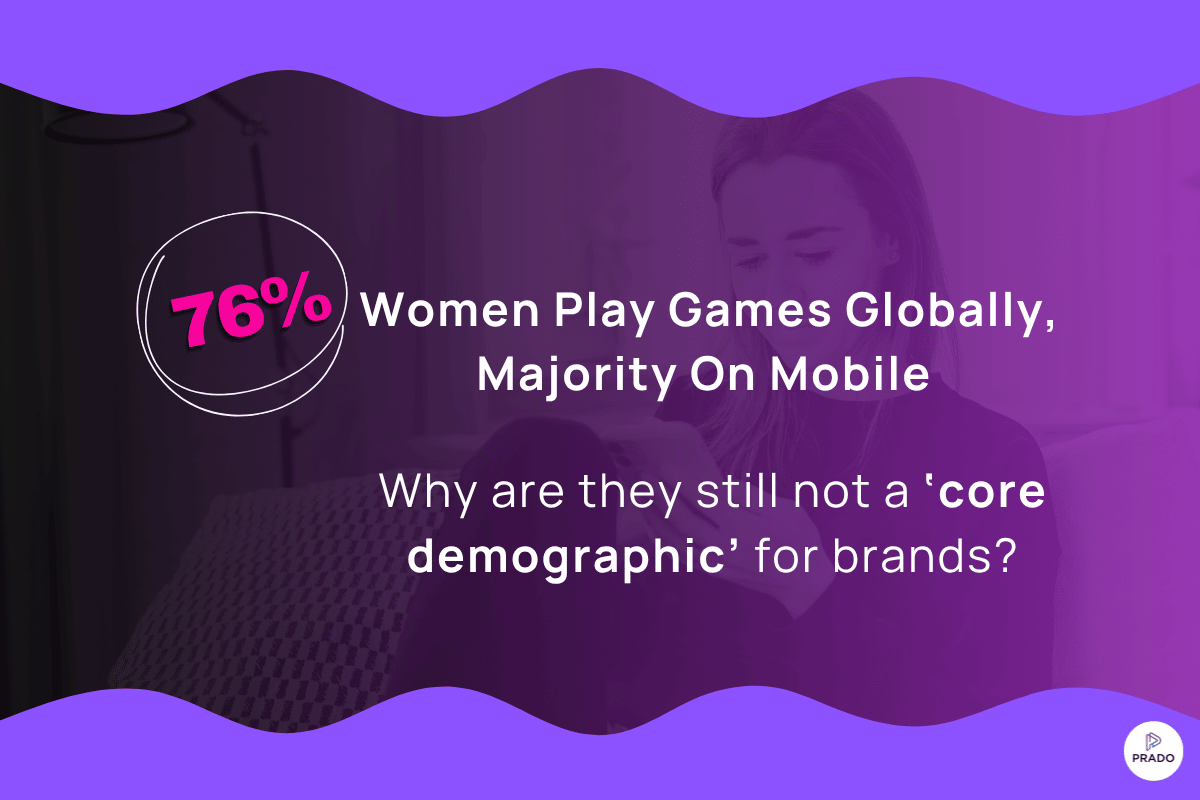
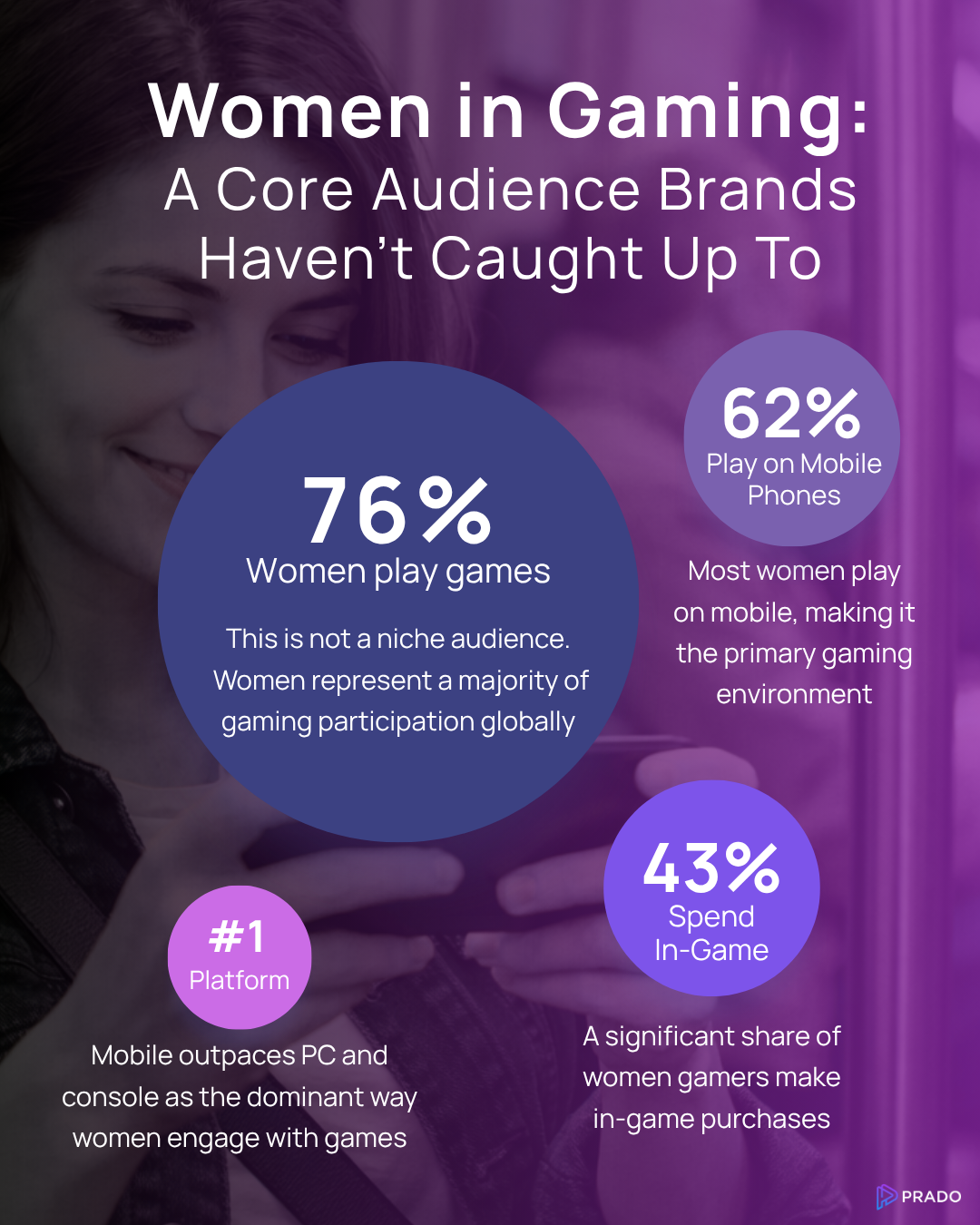
The latest Newzoo’s Global Gamer Study confirms what the industry has long underestimated: 76% of women globally play games, with the majority doing so on mobile devices.
For media planners, this isn’t just a scale story. It’s a shift in how gaming audiences behave. While participation is high, conversion is not uniform. Women show lower spending rates than men (43% vs 58%), not because of lower engagement, but because their paths to discovery and purchase are more fragmented.
That gap is where most media strategies fall short. When planning assumes a single journey or channel, it misses how this audience actually moves across gaming environments. Women are not only participating at scale, they’re doing so in mobile-first environments, where engagement is frequent, session based, and integrated into daily routines.
Mobile is not just another channelת it is the primary environment where this audience engages, especially compared to PC and console, which remain more male-skewed. At the same time, 43% of women report spending in-game, reinforcing that this is not passive attention, it’s an active, monetizable audience.
The challenge is reaching relevance within fragmented, privacy-first environments. That’s where mobile gaming becomes strategically important. It offers high-frequency engagement in structured environments, where context and not identity, becomes the primary signal for performance.
For advertisers, the implication is not about targeting “women gamers” as a segment, but adapting to how modern audiences behave, across moments. Campaigns that align with context and environment will outperform those still built on shrinking identity signals.
If mobile gaming is not a defined part of your media strategy, you are likely missing one of the most consistent, high-attention, and underutilized environments available today.
You can read Newzoo's Global Gamer Study HERE.
.png)


